
BusinessWeb Design
If you’re planning a new website, one of the first decisions you’ll face is choosing between a custom-built website and a template-based website. Both options can work—but the right choice depends on your goals, budget, timeline, and how much flexibility you need.
In this guide, we break down everything you need to know so you can confidently choose the best option for your business.
1. What Is a Template Website?
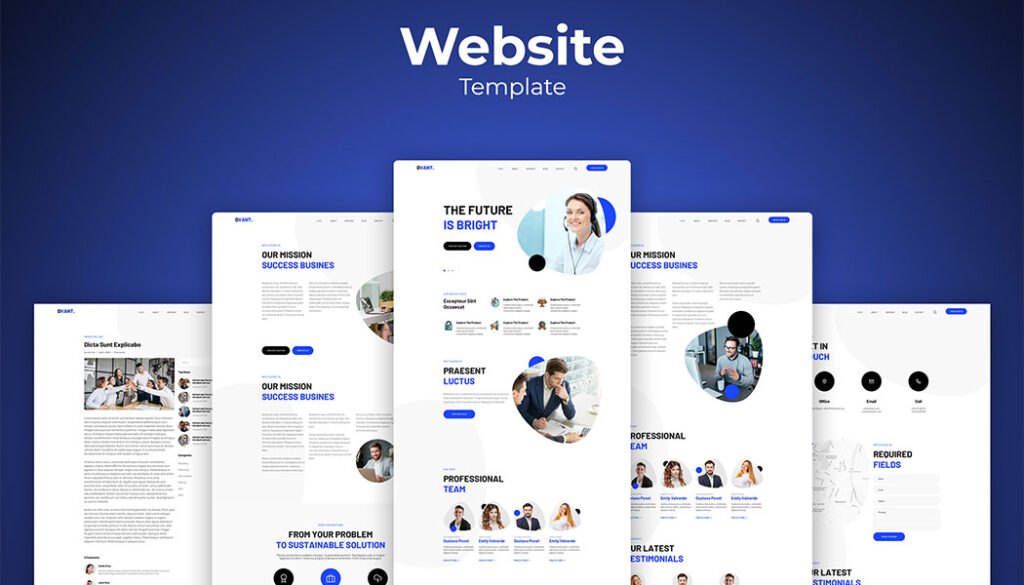
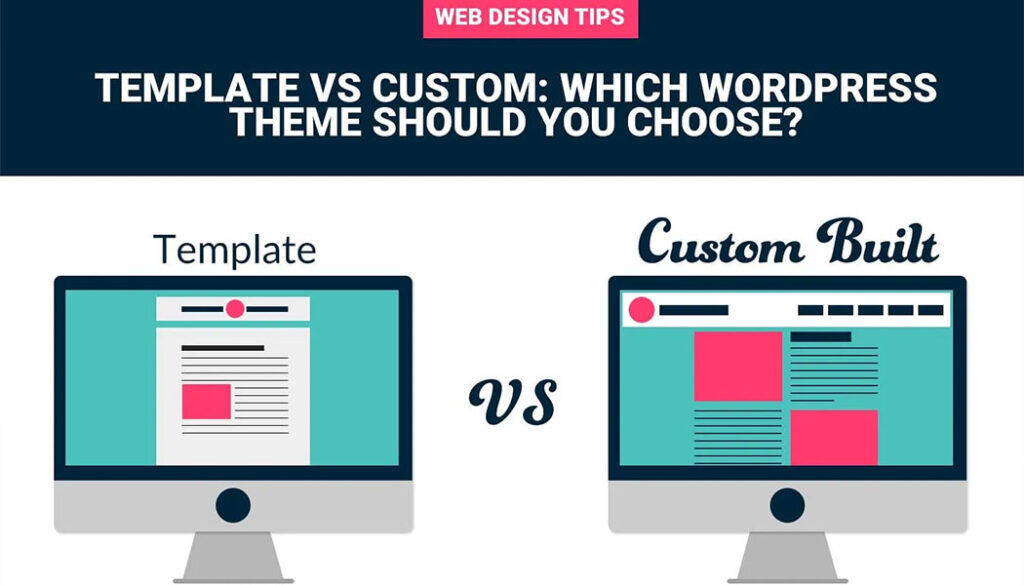
A template (or theme) website is built using a pre-designed layout. You simply replace the text, images, and colors to match your brand.
You’ve likely seen templates on:
WordPress Themes
Shopify Themes
Wix Templates
- Webflow Templates
Advantages of Template Websites
Affordable – Lower cost compared to custom builds
Faster launch time – Often ready in a few days
Beginner-friendly editing
Lots of beautiful designs available
Limitations of Template Websites
Limited customization — you must work within the template
Harder to scale as your business grows
Many templates are bloated and slow
Not unique—other businesses may use the same design
- Add-ons may require paid plugins
- Difficult to implement advanced features
Best for: small businesses, startups, personal websites, early-stage products.
2.What Is a Custom Website?
A custom website is designed and developed from scratch, based entirely on your brand, content, and business goals.
Everything—from layout to animations to backend features—is built specifically for your needs.
Advantages of Custom Websites
Unique design — no one else has your layout
Fully scalable — easily grows with your business
Better performance — cleaner code + faster loading
SEO-friendly structure
Custom features and integrations
- Stronger brand authority
- Better security
Limitations of Custom Websites
Higher investment
Longer development time
Requires a skilled designer & developer
Best for: established businesses, growing startups, e-commerce, multilingual websites, and brands with long-term plans.
3. Custom Website vs Template — Head-to-Head Comparison
| Feature | Custom Website | Template Website |
|---|---|---|
| Design Flexibility | Unlimited | Limited |
| Brand Uniqueness | High | Medium / Low |
| Performance & Speed | Excellent | Depends on theme |
| SEO Optimization | High | Basic |
| Security | Strong | Moderate |
| Cost | Higher | Lower |
| Launch Time | Longer | Fast |
| Scalability | Excellent | Limited |
| Support | Ongoing professional support | Self-managed or theme support |
| Advanced Features | Fully customizable | Hard to implement |
4. How to Decide Which One Is Right for You
Ask yourself these questions:
1. What is your current budget?
If your budget is small, a template is a good start.
If you can invest more, a custom build gives long-term value.
2. How fast do you need the website?
Templates launch quickly.
Custom sites take time but deliver better results.
3. Do you need advanced functionality?
For example:
Membership systems
Appointment booking
Complex product filters
Multilingual CMS
Custom dashboards
These are easier with a custom website.
4. How important is branding?
If you want a strong, unique identity that sets you apart—custom wins.
5. What is your long-term growth plan?
Template websites are good short-term solutions.
Custom websites support long-term scaling.
Which One Do We Recommend?
If you’re just starting or running a simple business:
Template website is perfectly fine.
If you want long-term growth, better performance, and a professional brand:
Custom website is the better investment every time.
Most successful Swiss and European businesses eventually move from templates to fully custom websites because of the improved results.
FAQs: Frequently Asked Questions
1. Is a custom website worth the extra money?
Yes, if your business needs strong branding, high performance, and scalability. It pays off in the long run.
2. Are templates good for SEO?
They can be, but many themes come with heavy code that slows down performance. Custom websites give more control over SEO.
3. How long does a custom website take?
Usually 2–6 weeks depending on features and complexity.
4. Can a template website be upgraded later?
Yes, but only to a point. Eventually, most businesses switch to a custom build.
5. Which is better for e-commerce?
For small shops: templates can work.
For serious brands: custom Shopify or custom WooCommerce is best.